Cancer is a complex disease that occurs when body cells begin to divide uncontrollably. However, unlike the claims of popular pseudo-scientists such as Bruce Lipton, science clearly shows that cancer is not simply the result of a bad lifestyle or “mental block”, but the result of a series of interrelated factors – from genetic predispositions to exposure to certain substances and infections.
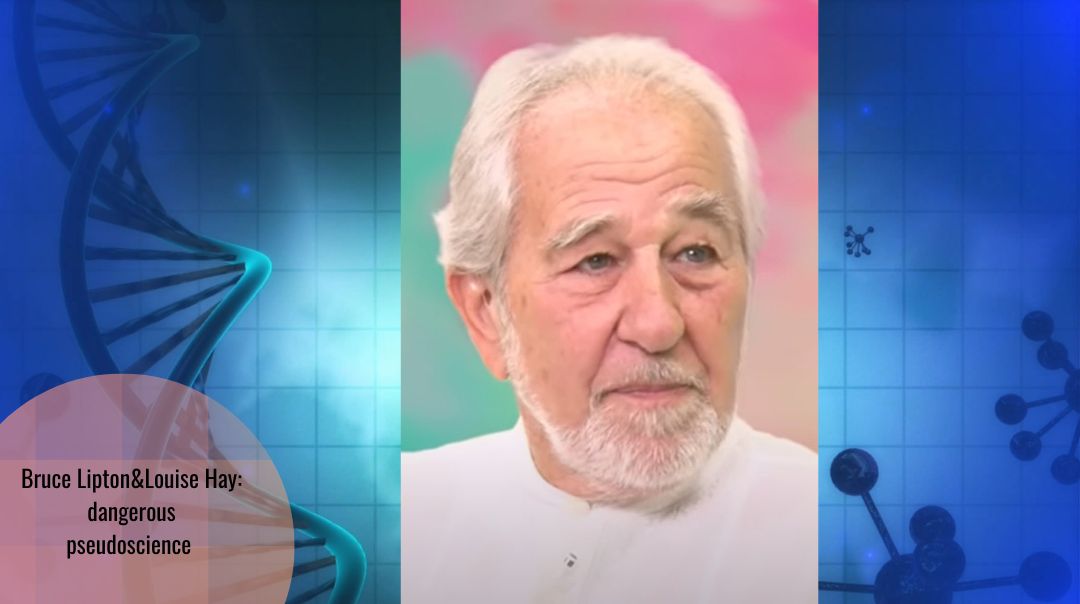
Bruce Lipton is a developmental biologist who advocates the pseudoscientific thesis that genes and DNA can be influenced by a person's beliefs. Also, Lipton spreads misinformation about vaccines and thinks that vaccines can cause autism, which has been refuted by a number of studies . This is another example of how people who spread misinformation often actually spread more misinformation.
In several of his interviews and books, Lipton has spread inaccurate theses about cancer and cancer patients. His statements are humiliating and deeply insulting to patients, and negatively affect their mental health and the path to recovery. One of them is that a person's beliefs and thoughts can lead to cancer. We ask cancer patients not to refer to such unethical stories by heart. It is clear that with some lifestyle choices – let's say we smoke or drink alcohol, but a part of cancer cases do not depend on us – we can accidentally become infected or the mutations that cause cancer arise completely by chance. Lipton's statements are unethical and malicious.
1. Genetic factors – heredity plays a role
Some people inherit mutations that increase their risk of cancer. The most famous example is mutations in the BRCA1 and BRCA2 genes, which increase the risk of breast and ovarian cancer. Although inherited mutations do not mean that a person will definitely get cancer, they can contribute to its development.
There are also oncogenes – genetic switches for cancer. Oncogenes are genes that, when mutated or overactivated, can contribute to uncontrolled cell growth and the development of cancer. In healthy cells, these genes play a role in regulating cell growth, division and differentiation. However, when an oncogene is mutated or overexpressed, cells can begin to divide uncontrollably, leading to the formation of tumors.
2. Spontaneous mutations – the lottery of biology
Every cell in the body goes through hundreds of thousands of chemical reactions a day. Sometimes, errors in DNA replication can lead to mutations that allow cells to get out of control. These mutations happen by chance, which means that cancer can also occur in people who lead a healthy life and do not have a genetic predisposition.
3. Environmental factors – toxins and radiation
Exposure to certain chemicals and physical agents increases the risk of cancer. For example:
- Tobacco contains carcinogenic substances that cause mutations in lung cells.
- Ultraviolet (UV) radiation damages DNA in the skin and can cause melanoma.
- Asbestos is linked to lung cancer and mesothelioma.
These are not the only carcinogenic substances. The list is long, and some of them are also found in plants and mushrooms. It should not be forgotten that alcohol increases the risk of cancer, especially liver cancer.
Another environmental factor, the one we most often think of as a cause of cancer, is ionizing radiation (e.g. radon, X-rays).
4. Infections – viruses can cause cancer
Certain viruses play a key role in the development of cancer:
- HPV (human papilloma virus) can cause cancer of the cervix, anus, external genitalia and throat.
- Hepatitis B and C increase the risk of liver cancer.
- Epstein -Barr virus (EBV) is associated with certain types of lymphoma.
This shows that cancer is not only a matter of individual choice, but can be the result of infections that are not under the direct control of the individual.
5. Diet and lifestyle – only part of the puzzle
While certain lifestyle factors, such as smoking, poor diet, and physical inactivity, can increase the risk of cancer, they are not the only cause. Even people who lead extremely healthy lifestyles can develop cancer due to random mutations or genetic predispositions.
6. Aging – one of the risk factors
The most important factor for the development of cancer is age. The older a person is, the greater the chance that mutations that can lead to cancer have accumulated in their cells. This explains why cancer is more common in older people, regardless of their lifestyle.
Bruce Lipton “Cancer quack”
For those who don't know, “quack” is a term that denotes frauds, pseudo-scientists and pseudo-doctors, charlatans. Lipton, although he is a biologist by training, although he has a PhD, and even worked at Stanford on stem cells, promotes some things that are actually pseudoscience or, as some want to alleviate the situation, “unconventional science”. This is not the first scientist and doctor of science who went to charlatans and spread misinformation. Nobel laureates Linus Pauling and Luc Montagnier are also examples of this phenomenon.
He interprets some fairly new terms, such as gene control and epigenetics , arbitrarily and gives them meanings and purposes that science has not determined. Epigenetic control of gene activity is based on the fact that some substances, such as methyl groups, can be attached to some part of DNA and actually control the degree of twisting of DNA, i.e. chromatin. If the genetic material is very condensed, twisted, then the genes cannot be read, they are not available for transcription. In this way, no protein can be formed.
In his performances and in the book The Biology of Belief, Lipton claims that our thoughts, our subconsciousness affect cells and that they can cause cancer. Let's say if a person is full of love, then he releases hormones and neurotransmitters such as dopamine, oxytocin and this has a beneficial effect. Of course, it is certain that this works positively and has a good effect on the body. And surely a person who is surrounded by love and kindness has less stress. Liptom claims that a person who is exposed to fear is exposed to stress hormones and this creates an inflammatory reaction that produces disease. It is also clear that inflammatory reactions can have negative health effects both in the short and long term, but what Lipton is actually saying is that a person is to blame for his own disease, cancer. If she was under less stressful situations, if she was a better person, if she didn't have subconsciously ugly thoughts… this is accusing patients of their illness and insulting them. He attributes superpowers to epigenetic control, the effects of which have not yet been sufficiently investigated – everything that cannot be explained, he simply explains with the epigenetic action of thoughts, subconsciousness and hormones. He also claims that we are the masters of our genetic activity, practically that with our will, positive thoughts we can influence the activity of genes and the treatment of cancer. This is dangerous thinking because charlatans lead patients to stop taking therapy and to treat themselves with the “power of positive thoughts”, “manifestation” and the like. Or even if the patient takes medication, then they attribute the cure to willpower, not therapy.
He also claims that the idea that genes control biology is incorrect and believes that it is actually the environment, and that DNA and RNA only respond to these stimuli, and therefore today's science is not correct. However, biology does not claim that only genes control the cell and the organism, but that it is a complex combination of environmental and genetic factors. What we often see with Lipton is that he distorts some scientific argument to the limit and then counterarguments this so caricatured and simplified claim in a manipulative manner called scaremongering.
Louise Hay
A similar argument was made by New Age and alternative medicine motivational speaker Louise Hay, who claimed that cancer and other diseases could be cured with positive thoughts.
Two of Louise Hay's most famous books, Heal Your Body: The Mental Causes of Physical Illness and the Metaphysical Way to Overcome Them and You Can Heal Your Life , directly link physical problems like cancer to certain negative emotional patterns and argue that treating the emotional components will also heal the physical conditions. Hay wrote that thoughts—not just sexual behavior—can cause AIDS:
“It is my belief that venereal disease is almost always sexual guilt. It comes from a feeling, often subconscious, that it is not right to express oneself sexually. A carrier of a venereal disease may have many partners, but only those whose mental and physical immune systems are weak will be susceptible to it.”
These are very dangerous sentences and are not at all in line with epidemiology. So, the person is to blame for their own thoughts for getting sick. This also conveys the message that if we think positively, we cannot get sexually transmitted diseases, even if we do not use protection and have risky behaviors. Needless to say, this is dangerous nonsense.
Conclusion – cancer is not a matter of “guilt”
Theories such as those propagated by Bruce Lipton, which suggest that cancer is merely the result of a bad lifestyle or negative thinking, are not based on scientific evidence. They are not only incorrect, but also harmful, as they can lead to stigmatization of patients. Cancer is the result of complex interactions of genetics, environment, random mutations and risk factors – not a simple “bad choice” by an individual.
Scientific understanding of cancer enables the development of better therapies and prevention, while pseudoscientific claims only divert attention from real solutions.
This article was created as part of the SCI-Shield project.
The creation of this content was supported by the European Commission. The views and values presented in it are the sole responsibility of the authors and do not necessarily represent the views and values of the European Commission.
The European Commission's support for the production of this content does not constitute an endorsement of the contents, which reflect the views only of the authors, and the Commission cannot be held responsible for any use that may be made of the information contained therein.
Jelena Kalinić, MA in comparative literature and graduate biologist, science journalist and science communicator, has a WHO infodemic manager certificate and Health metrics Study design & Evidence based medicine training. Winner of the 2020 EurekaAlert (AAAS) Fellowship for Science Journalists. Short-runner, second place in the selection for European Science journalist of the year for 2022.